New in :Recruit – Revamped Talent Landing Pages
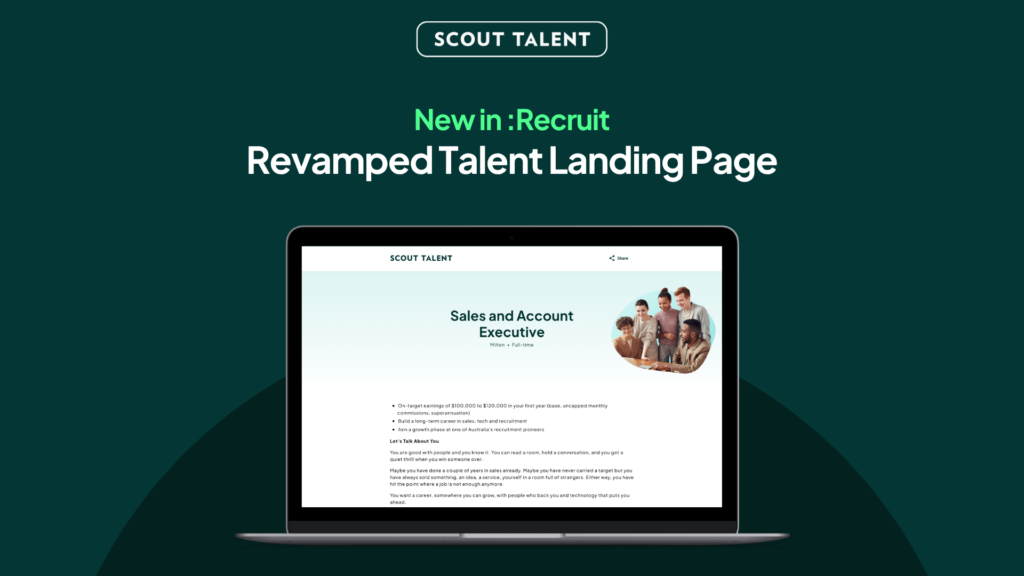
A better first impression for every role Your job landing page is often the first real impression a candidate has of your organisation. But older landing pages can look dated, feel inconsistent from one device to the next, and create barriers for candidates who rely on assistive technology, which means strong candidates may lose interest before they ever reach your application form. Today, we’re launching the new Talent Landing Page (TLP), a refreshed, accessible, brand-led design that helps your roles make a stronger first impression and gives every candidate a smoother path to apply. What’s New in a Nutshell Your employer brand, front and centre: A modern layout and design reflects your organisation, its values and its brand. Accessible by design: Built to WCAG accessibility standards, so more candidates, including those using assistive technology, can read your ad and apply with confidence Faster and consistent everywhere: A quicker, cleaner page that looks and works the same across desktop, tablet, and mobile A smarter, faster apply experience: Candidates can auto-complete their details from an uploaded resume, easy-complete from Seek and Indeed, and use Smart Response for helpful feedback on their screening answers before they submit Why We Built the New TLP Attracting the right candidates starts well before the application form. The look, clarity, and accessibility of your job landing page all shape whether a candidate decides your role is worth their time. That is why Scout Talent has continued to invest in the candidate-facing experience, not just the tools your team uses behind the scenes. The new TLP builds on that direction. Rather than presenting your roles on a dated, one-size-fits-all page, the new design puts your employer brand first, meets modern accessibility expectations, and loads faster and more consistently across devices. It is not a change to your screening questions or application process. It is a better home for the roles you are already advertising, designed to help you attract and convert more of the right candidates. What This Means For Your Team The new TLP delivers three key improvements to your candidate attraction: A stronger employer brand: Your header image, About Us content, and optional video help each role feel like your organisation, not a generic template. A more branded, professional page helps you stand out and build trust with candidates early. A more inclusive application experience: The page is built to WCAG accessibility standards, with features such as keyboard navigation, skip links, and a clear heading structure. This widens the pool of candidates who can comfortably engage with your roles and helps you meet growing accessibility expectations. A map is also included to ensure candidates can quickly narrow down a job’s location. A smoother, smarter path to apply: On a faster, mobile-friendly page, candidates can auto-complete their details from an uploaded resume, easy-complete from Seek and Indeed, and get AI feedback on their screening answers with Smart Response. This reduces drop-off and lifts the quality of the responses your team receives. How to Get Started The new TLP is set up for your organisation by our team, so your branding is applied correctly before it goes live. Getting started is simple: 1 Explore the new design so you can see how your roles could look 2 Gather your branding: your header image, brand colours, About Us content, and an optional About Us video or Image 3 Share your design preferences with your Customer Success contact 4 Confirm your design, then we set it up for your organisation 5 Your new Talent Landing Page goes live across your job advertisements Frequently Asked Questions (FAQ) Do I need to do anything to switch to the new design? Yes. The new TLP is set up per organisation so your branding is applied correctly before it goes live. It is not a switch you turn on yourself. Contact your Customer Success team to get started and they will guide you through it. Will this change my screening questions or application process? No. Your jobs, screening questions, and workflows stay exactly as they are. The new TLP changes how your role is presented to candidates, not how you screen or manage applications. Is the new design accessible? Yes. The new TLP is built to WCAG accessibility standards, with features such as keyboard navigation, skip links, and a clear heading structure. This helps more candidates, including those using assistive technology, read your advertisement and apply. Does it work on mobile? Yes. The page is responsive and designed to look and work consistently across desktop, tablet, and mobile, so candidates get the same quality experience wherever they apply. Can I include a video? Yes. The About Us section supports an optional YouTube or Vimeo video alongside your written content. A video is not required, so you can choose whether to include one or replace it with an image Does the new TLP include Smart Response and quick-apply features? Yes. The new TLP brings the smarter apply experience together in one place. Candidates can auto-complete their details from an uploaded resume, easy-complete from Seek and Indeed, and use Smart Response to get AI feedback on their screening answers before submitting. The result is a faster application for candidates and clearer, more complete information for your team. Will my existing job links still work? Yes. Your job advertisement links continue to work. Once the new TLP is set up for your organisation, those same links present your roles using the new design. Ready to give your roles a stronger first impression? The new Talent Landing Page helps you attract more of the right candidates with a modern, accessible, brand-led design, while keeping the jobs, questions, and workflows your team already relies on. Make a better first impression on every role with the new Talent Landing Page. For more details on setup and best practices, contact our Customer Success team
Hiring in 2025: What Canadian Candidates Really Want

Discover the four things Canadian candidates expect in 2025, from radical flexibility to career growth. Learn how Scout Talent’s flat-fee recruitment model helps you attract and retain top talent while saving time and money.
The Importance of Employee Advocacy & how to amplify it!
In terms of talent acquisition, organizations have a powerful but sometimes overlooked resource right in front of them: their employees. As we share insights from our latest report, Employer Branding Insights 2024, let’s explore how your workforce can play a crucial role in attracting top talent. In the ever-changing world of employer branding, we’re realizing the pivotal role employees play as ambassadors of their organization’s brand. At Scout Talent, we’ve delved deep into the data from our 2024 Candidate Experience Survey, which reveals compelling insights into the influence of employee advocacy on recruitment success. Let’s explore how organizations can leverage the unique voices of their workforce to bolster their employer brand and attract top talent. Our Findings: Candidates listen to their networks Data from our 2024 Candidate Experience Survey has discovered that a staggering 45% of candidates acknowledge recommendations from personal and professional networks as pivotal factors influencing their decision to apply for a job. This vital data underscores the untapped potential for organizations to leverage employee advocacy as a potent recruitment strategy. Showcase your organization’s culture with authentic employee stories and create a work environment where people feel valued. This will lead to genuine employee advocacy that truly connects with potential hires. Practical Strategies for Amplifying Employee Advocacy Cultivating a Culture of Trust and Engagement The foundation of effective employee advocacy lies in fostering workplace cultures characterized by transparency, collaboration, and mutual respect. Organizations must strive to create environments where employees feel valued and empowered to authentically champion their workplace. Transparency and Open Communication: Establish open lines of communication where employees feel comfortable sharing their experiences, ideas, and concerns. Regular town hall meetings, feedback sessions, and transparent policies contribute to a culture of trust. Empowerment and Recognition: Empower employees by giving them opportunities to contribute ideas, lead initiatives, and take ownership of their work. Recognize and celebrate their contributions through rewards, appreciation events, and public acknowledgments. Professional Development: Invest in the growth and development of your employees. Provide access to training, mentorship programs, and opportunities for career advancement. Employees who feel supported in their professional growth are more likely to advocate for their organization. Incentivizing and Rewarding Advocacy While creating an environment where employees feel valued and empowered to advocate for their organization is crucial, it’s equally important to implement tangible incentives and rewards to recognize their efforts effectively. Here’s how organizations can effectively incentivize and reward advocacy: Robust Referral Programs: Implementing well-structured referral programs can serve as a powerful mechanism to encourage employee advocacy. By incentivizing employees to refer qualified candidates, organizations tap into their networks and leverage their connections. These programs can include monetary rewards such as bonuses or commission-based incentives, as well as non-monetary rewards like recognition awards or extra vacation days. Recognition and Appreciation: Recognizing and appreciating employees for their advocacy efforts is paramount in cultivating a culture of engagement. Organizations can publicly acknowledge employees who go above and beyond in promoting the company culture or referring exceptional candidates. This recognition can take various forms, including employee spotlights in newsletters, shoutouts during team meetings, or inclusion in internal communications. Customized Incentive Structures: Tailoring incentive structures to align with the organization’s goals and values can enhance their effectiveness. Instead of adopting a one-size-fits-all approach, consider designing incentive programs that resonate with different employee demographics and preferences. This could involve offering personalized rewards based on individual preferences, career aspirations, or performance metrics. Promoting Authenticity Through Strategic Communication Authenticity emerges as the linchpin of successful employee advocacy. It’s not just about sharing branded content or scripted messages; it’s about showcasing genuine human experiences within the organization. Here’s how organizations can promote authenticity through strategic communication: Encouraging Genuine Sharing: Create avenues for employees to share their authentic experiences and insights openly. Whether through internal communication channels, social media platforms, or employee advocacy programs, encourage employees to share their stories in their own words. This humanizes the organization and allows prospective candidates to connect with real people and real experiences. Sharing Real Employee Stories: Highlighting real employee stories and testimonials can be a powerful way to showcase authenticity. Whether it’s through written testimonials, or video interviews, sharing stories of employee experiences, achievements, and challenges helps prospective candidates gain insight into the authentic human side of the workplace. Fostering Two-way Communication: Authentic communication is not just about broadcasting messages; it’s about engaging in meaningful dialogue. Create opportunities for employees to provide feedback, ask questions, and engage in conversations about the organization’s culture, values, and mission. By fostering two-way communication, organizations demonstrate transparency and authenticity, building trust with both employees and candidates. Employee advocacy represents a potent tool for organizations seeking to amplify their employer brand and attract top talent. By leveraging the unique voices of their workforce and implementing practical strategies to enhance advocacy, organisations can craft compelling narratives that resonate deeply with candidates. Our Employer Branding Insights 2024 report serves as a comprehensive guide for organizations looking to capitalize on the transformative power of employee advocacy. Embrace the insights provided and take proactive steps to unlock the full potential of your employer brand today. Click here to access the full report and discover how Scout Talent’s employer branding solutions can revolutionize your organization’s recruitment efforts.
Top 4 Ways to Attract and Retain Good Plant Operators

Attracting and retaining good employees has never been more important. In today’s job market, we have what is commonly referred to as a ‘candidate-short market’
Solve the top three talent acquisition challenges with employer branding
A report from KPMG has found that 77 per cent of business leaders have cited talent as their biggest challenge in 2023. The specific talent challenges being faced will range from attracting the right candidates, candidate drop off, and quick quitting. Creating a strategy to address these challenges is key to retaining your people, and
Solve the top three talent acquisition challenges with employer branding
A report from KPMG has found that 77 per cent of business leaders have cited talent as their biggest challenge in 2023. The specific talent challenges being faced will range from attracting the right candidates, candidate drop off, and quick quitting. Creating a strategy to address these challenges is key to retaining your people, and growing your business. One facet of this strategy should be Employer Branding. In this article, we’ll explore how organisations that prioritise Employer Branding can address the common talent acquisition problems mentioned above: Quick quitting Candidate drop off Building a talent pipeline Scout Talent’s Employer Branding service and talent pool management software module, :Engage, are designed to help create a long-term Employer Branding strategy, and articulate your EVP. We work with you to help you understand your “why” – why should someone work for you and not someone else? What makes you different? What makes you better? When you have articulated answers to these questions, it will help candidates understand your “why”, too. Employer Branding: a TA technique that solves problems How does Employer Branding solve quick quitting? Quick quitting is a phenomenon where a candidate takes a job, only to quit within the first year. Recruiting to replace the new hire can be a time-consuming and expensive process – plus, the gap they leave behind in your team can affect productivity and morale. So how do organisations tackle this phenomenon? Many employers believe that quick quitting is the result of something negative about the candidate (for example, they do not want to do hard work or they found a higher paying job elsewhere). However, it is often related to a poor candidate experience during the talent acquisition process, which can lead to a lack of connection between a person and their organisation. Employer Branding addresses quick quitting by building a great candidate experience from before the person applies, to long after they have accepted the job. Once an organisation is able to articulate its Employer Brand (with the help of Scout Talent’s Employer Branding specialists perhaps), they are able to incorporate key elements of it throughout the entire application process. From the job ad, through the interview process, and right up to when an offer is made, organisations should be communicating their unique values and benefits to applicants. This ensures candidates are aware of the “why”, and are actively connected with the organisation’s purpose and values. An organisation can continue to build the connection that new hires have with them as part of their onboarding process. By showcasing the organisation’s Employer Brand that was spoken about as part of the attraction stage, new hires will start to feel like they are part of the team. Now is the time for them to see the organisation’s purpose, values, and benefits come to life! New hires who have received a positive candidate experience, and who have been onboarded with care, are not going to be immediately looking for a new role. Quitting within a year comes from a lack of connection between an employee and their organisation. Strong employer branding addresses this throughout the entire talent acquisition process. Want to learn more about articulating your EVP? Get in touch with our Employer Branding specialists here. How does Employer Branding reduce candidate dropoff and ghosting? Some employers find that candidates start to disappear during the application and interview process. They may have expressed initial interest but at some point became disinterested or preferred their prospects elsewhere and moved on. In many cases, these applicants “ghost” the organisation altogether, disappearing without giving feedback. Why does this happen? Often, it’s because the candidate applied for the role with no excitement or passion. They weren’t interested in working for that specific organisation – they just wanted a job. Then, something else came along and they moved on. Employer Branding can help to prevent this issue. When organisations clearly showcase their benefits and values that set them apart, the applicants they attract are more likely to be connected to the organisation and stay invested in the application and interview process. In the event that a promising candidate does take another job, having a strong Employer Brand is still a benefit as it will make the candidate more likely to communicate rather than disappear – ghosting an organisation would mean possibly burning the bridge for future opportunities. The great news is that Scout Talent has tools to reduce dropoff and support various candidate journeys. Alongside our Employer Branding services, our software module :Engage allows you to build and nurture talent pools, so that you can stay in touch with previous candidates for future vacancies. How can Employer Branding support your talent pipeline? Another issue that many organisations face is losing out on highly skilled candidates who did not get hired simply because there was only one vacancy. This issue worsens when these candidates do not receive feedback on their application; if they feel they had a bad experience, unsuccessful candidates may not speak positively about an organisation, which could affect its ability to draw in future candidates. In this current competitive talent climate, organisations can stay proactive by responding to every candidate and adding them to their talent pool through software modules such as :Engage. By building a talent pipeline and engaging with promising candidates about new opportunities, organisations will be more prepared to address future talent acquisition needs. Scout Talent’s platform is a Circle Back Initiative certified provider. This means that our technology empowers organisations to provide quick and branded feedback to every candidate, regardless of whether or not they were successful in their application. From an Employer Branding perspective, this helps an organisation to build a reputation as an employer that is communicative and treats people as more than just a number. From the applicant’s perspective, they are receiving a better candidate experience and are more likely to want to stay engaged with an organisation. This sets your organisation up for success as it provides a future pipeline for your
5 Tactics to Avoid the Grief of Candidate Ghosting

Scout Talent CEO, Andrea Davey, shares top tips to avoid candidate ghosting and get better hiring results in a competitive candidate market.
Cost-Effective Ways to Attract & Hire Temporary Workers

Learn more about how organizations can cost effectively hire temporary workers to speed up the recruitment process.
How to Deliver the Right Talent at the Right Time with Talent Advisory Solutions

The recruitment process is extremely challenging. Find out how talent advisory solutions can help you find the best talent.
5 Ways to Hire For Culture Fit

Good workplace culture is an important tool to attract and retain top talent. Here’s how to hire for culture fit (and why you should).