The AI-Hiring Problem You’re Facing
There’s a divide opening up inside teams right now, and it has nothing to do with age or tenure. It’s about how naturally someone reaches for AI when they’re solving a problem.
Some people are AI-native. They experiment daily, they’ve got a long list of things that didn’t work, and AI has become instinctive rather than something they need reminding to use. Others are still doing the job the old way, not because they can’t adapt, but because it hasn’t clicked yet. And a smaller group are avoiding it altogether, for reasons that are moral, environmental, or rooted in genuine hesitation.
Most hiring processes weren’t built to tell these groups apart. Written applications and resumes can be AI-assisted, so they don’t tell you much about how someone actually thinks. And the risk of getting this wrong cuts both ways: hire for AI-nativeness where it doesn’t matter, and you’ll filter out great people for the wrong reasons. Fail to hire for it where it does matter, and the gap inside your team will keep widening.
What’s inside
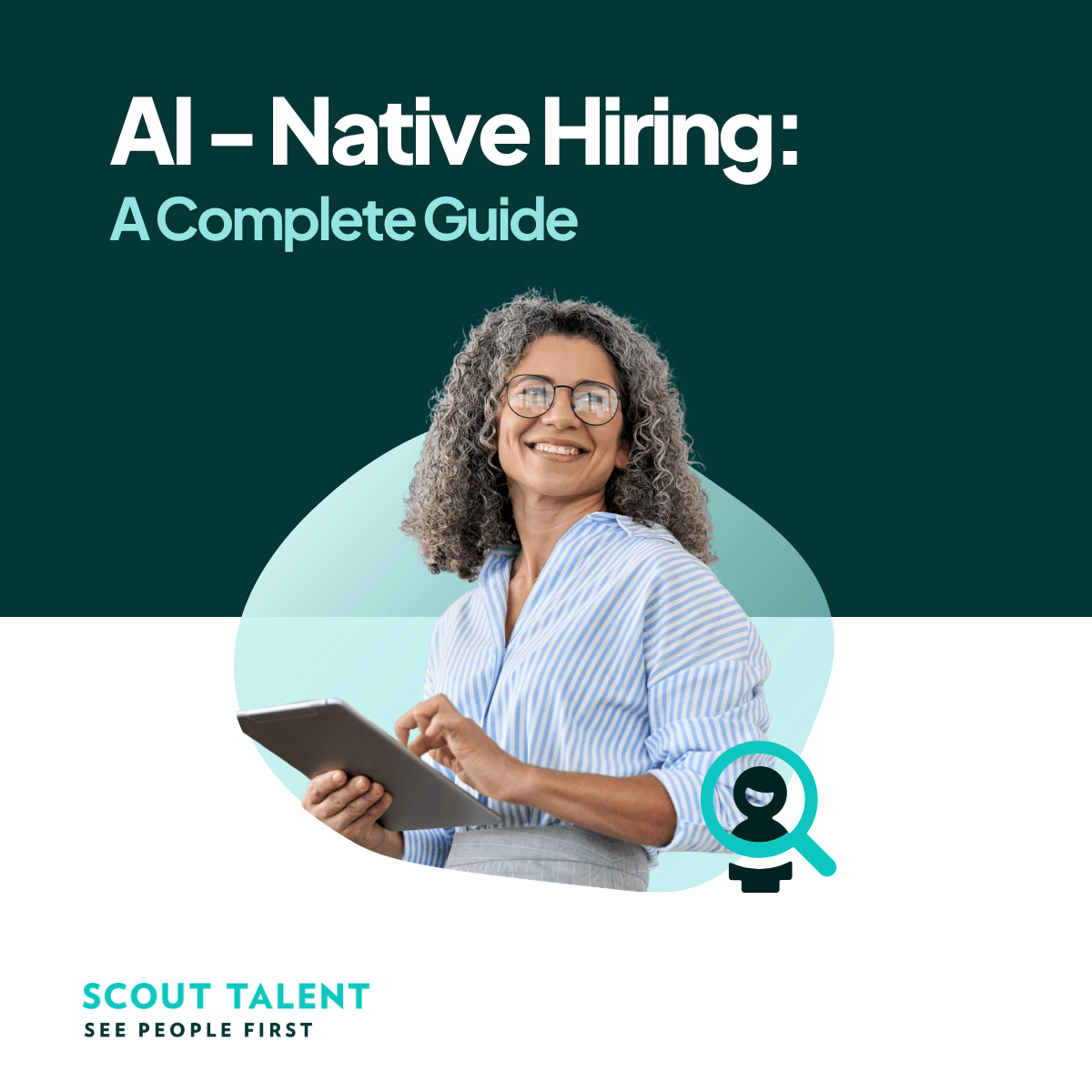
This guide gives your hiring team a practical framework for navigating that divide, including:
- The four tiers of AI adoption — AI-avoidant, AI-curious, AI-capable, and AI-native, and how to tell them apart in practice, not just in theory
- What “workslop” actually is — and why AI-dependent doesn’t mean the same thing as AI-native
- How to screen for mindset, not just skill set — the interview questions and behavioural signals that reveal genuine fluency versus surface-level prompting
- A role-by-role lens — because not every position needs the same level of AI fluency, and knowing where the line sits matters more than chasing a label
- Leadership vs. execution — what “AI-native” should actually look like at each level of your organisation
- A first-quarter action plan — concrete steps to define what AI-native means for your organisation before you go to market
Who this guide is for
In-house recruiters, HR professionals, and hiring managers in established organisations who are starting to notice that gap inside their own teams, whether they’re rethinking a single role or reshaping hiring criteria across the business.
Why Scout Talent
We’ve spent 20 years building recruitment expertise for in-house teams, and today that includes navigating exactly this shift. Our own AI, Felix, lives inside :Recruit, and we’ve had to work through the same questions this guide covers: what does AI-native actually mean for a role, how do you screen for it honestly, and where does it not apply at all.
This guide draws directly on how our CEO, Andrea Davey, thinks about and screens for AI-native hiring inside Scout Talent itself.